About
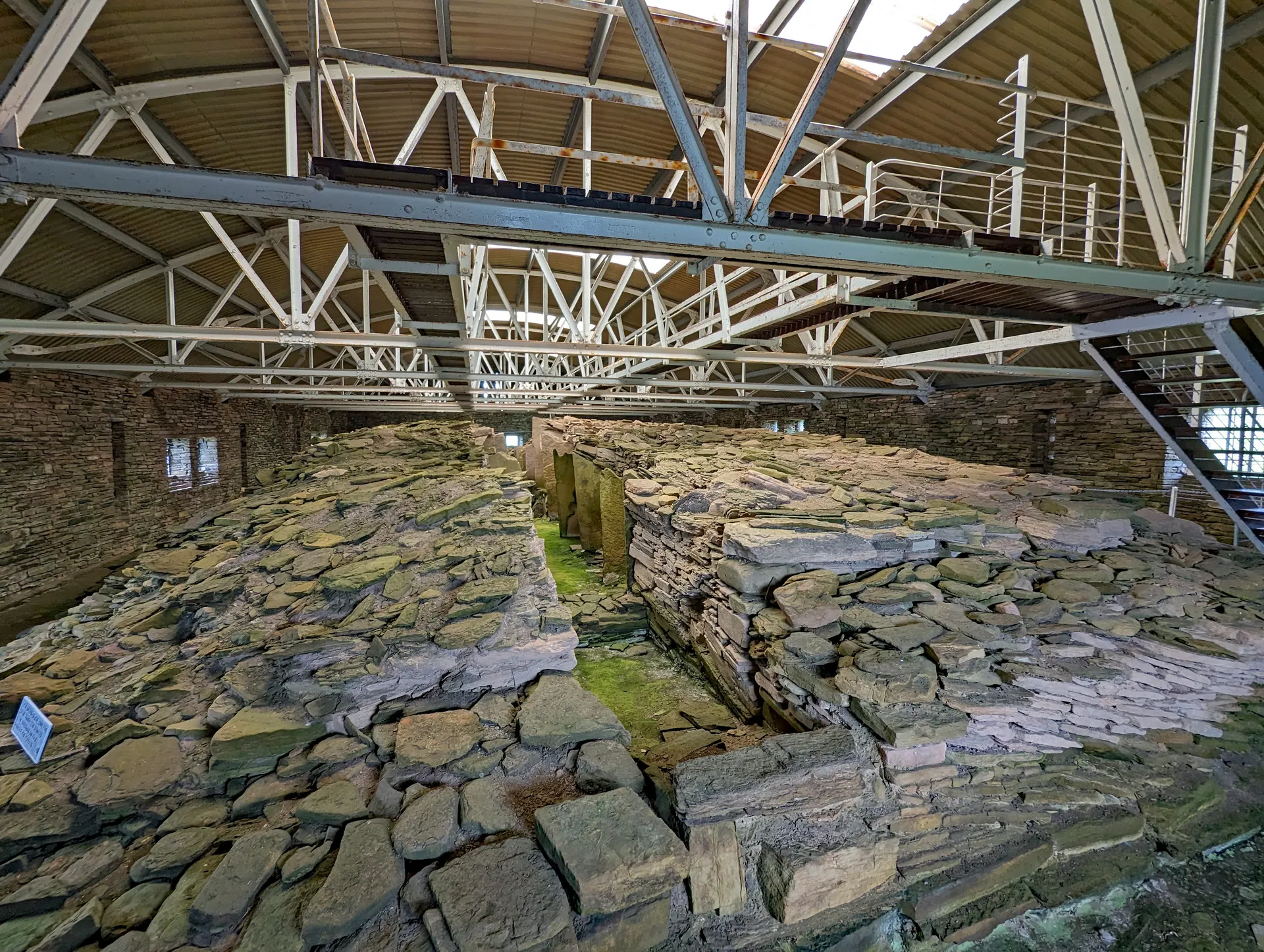
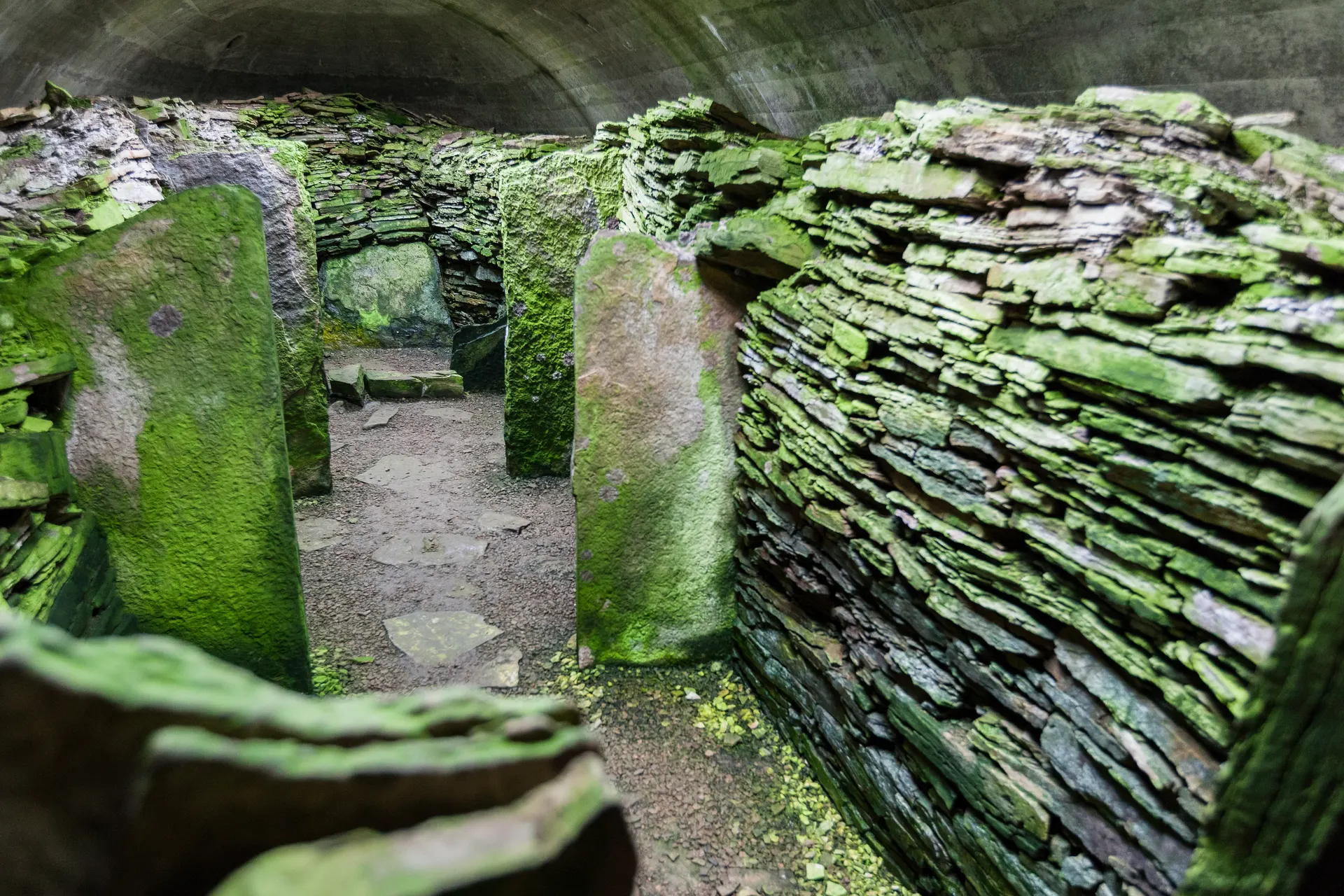
Beside Grobust Bay on the Orkney island of Westray, sand dunes hid a farming settlement lived in from about 3300 BC to 800 BC until it was found in the 1800s. Excavations have uncovered a dozen Neolithic buildings and Orkney's largest Bronze Age settlement. Here was found the Westray Wifie, a tiny carved stone figure and the earliest depiction of the human form found in the UK, now shown with two later finds in the Westray Heritage Centre. The Neolithic houses have thick drystone walls, central hearths and stone dressers like Skara Brae's; in one, many cattle skulls were set upside down in the foundations. The Bronze Age buildings come in pairs with shared paved forecourts, beside buried fields still bearing plough marks and a graveyard of at least 50 people. Excavation runs from May to September, when most is uncovered; out of season there is less to see, but the dunes look out to the Atlantic. A small car park is five minutes' walk west.
Check today’s timesSee all times
- Links of NoltlandOpen all year; an unstaffed open site, no hours published; the excavation season (May to September) has ended
Opening times may change at short notice.
Historic Scotland: 'Links of Noltland is free to visit and is open year-round.' The excavation season is May to September, when parts of the settlement can be seen uncovered as work continues; out of season there is less to see. No hours or notices on 21 October 2026.
The remains lie in sand dunes above Grobust Bay. Parts of the dunes are being consolidated and replanted to protect buried remains: keep off the areas marked by signs. Three stone figurines found here are shown at the Westray Heritage Centre. No toilets or other facilities at the site.
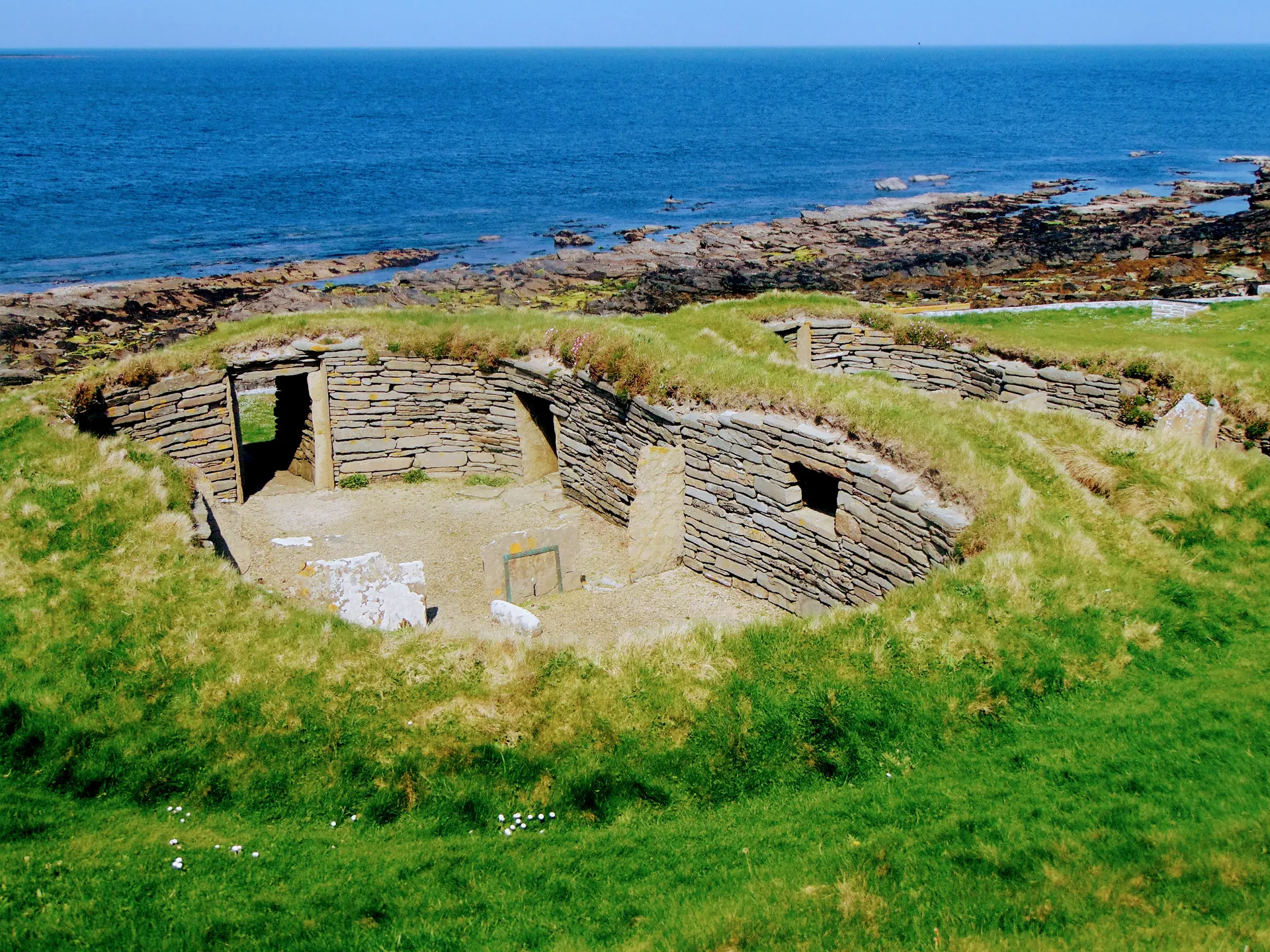
Photo: The excavated stone walls of the Neolithic settlement at the Links of Noltland in the sand dunes, with Grobust Bay and the sea beyond. Sandy Gerrard, CC BY-SA 2.0. Source: https://commons.wikimedia.org/wiki/File:Links_Of_Noltland_Neolithic_Settlement_-_geograph.org.uk_-_6733818.jpg. Licence: https://creativecommons.org/licenses/by-sa/2.0. Resized and cropped for display; derivatives retain the source licence.
Reviews & Tips
No reviews yet
No reviews yet. Be the first to share your experience!