About
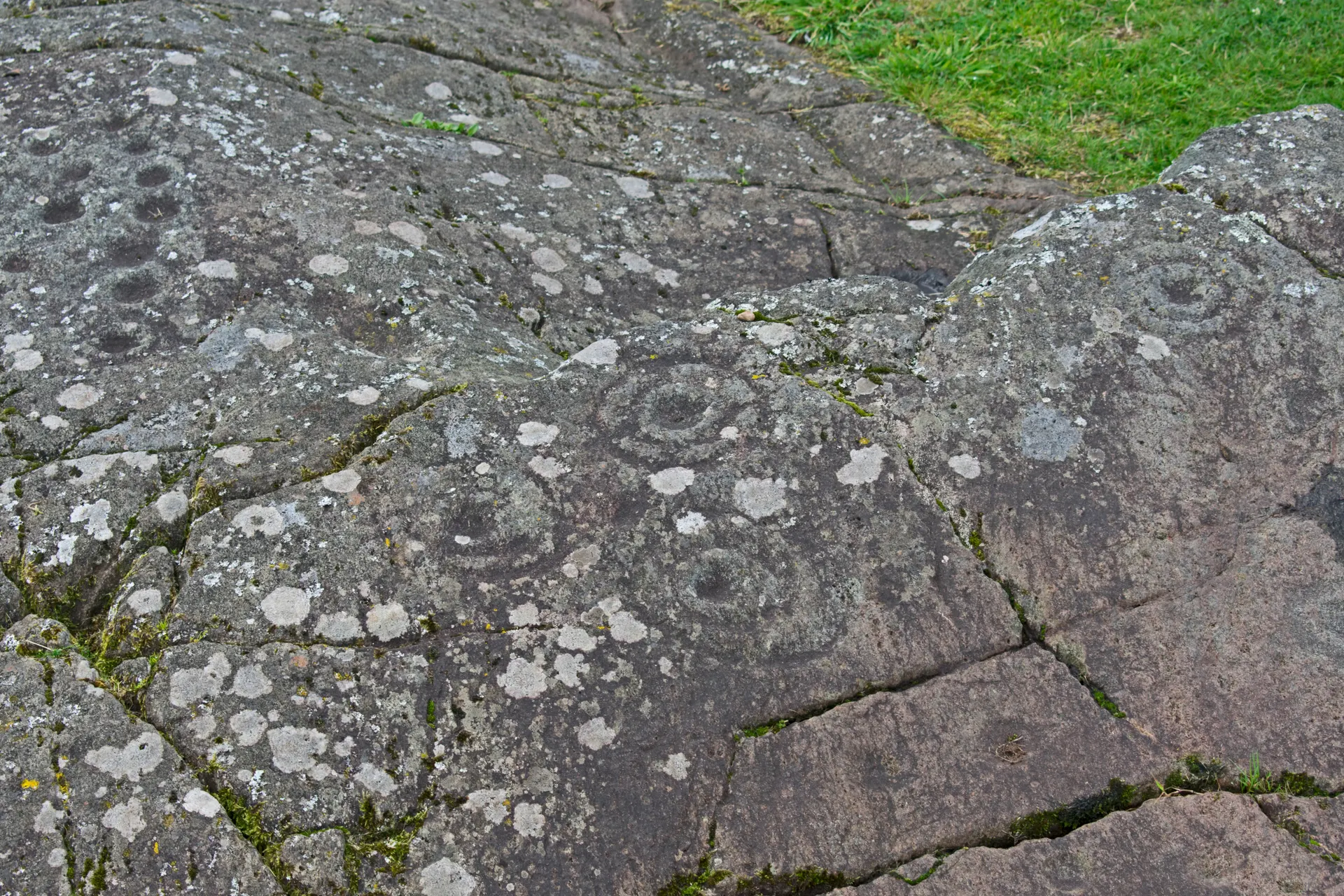
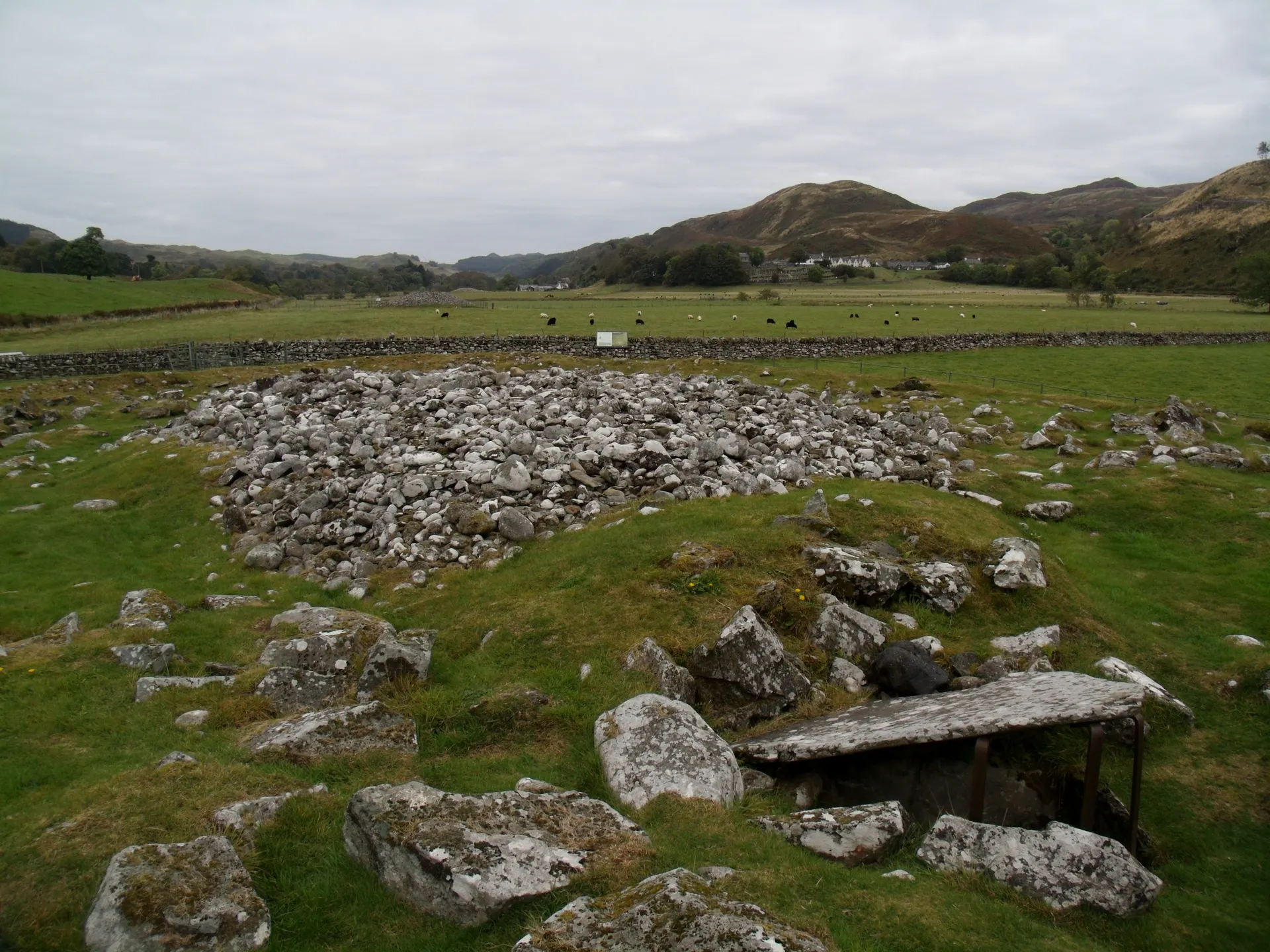
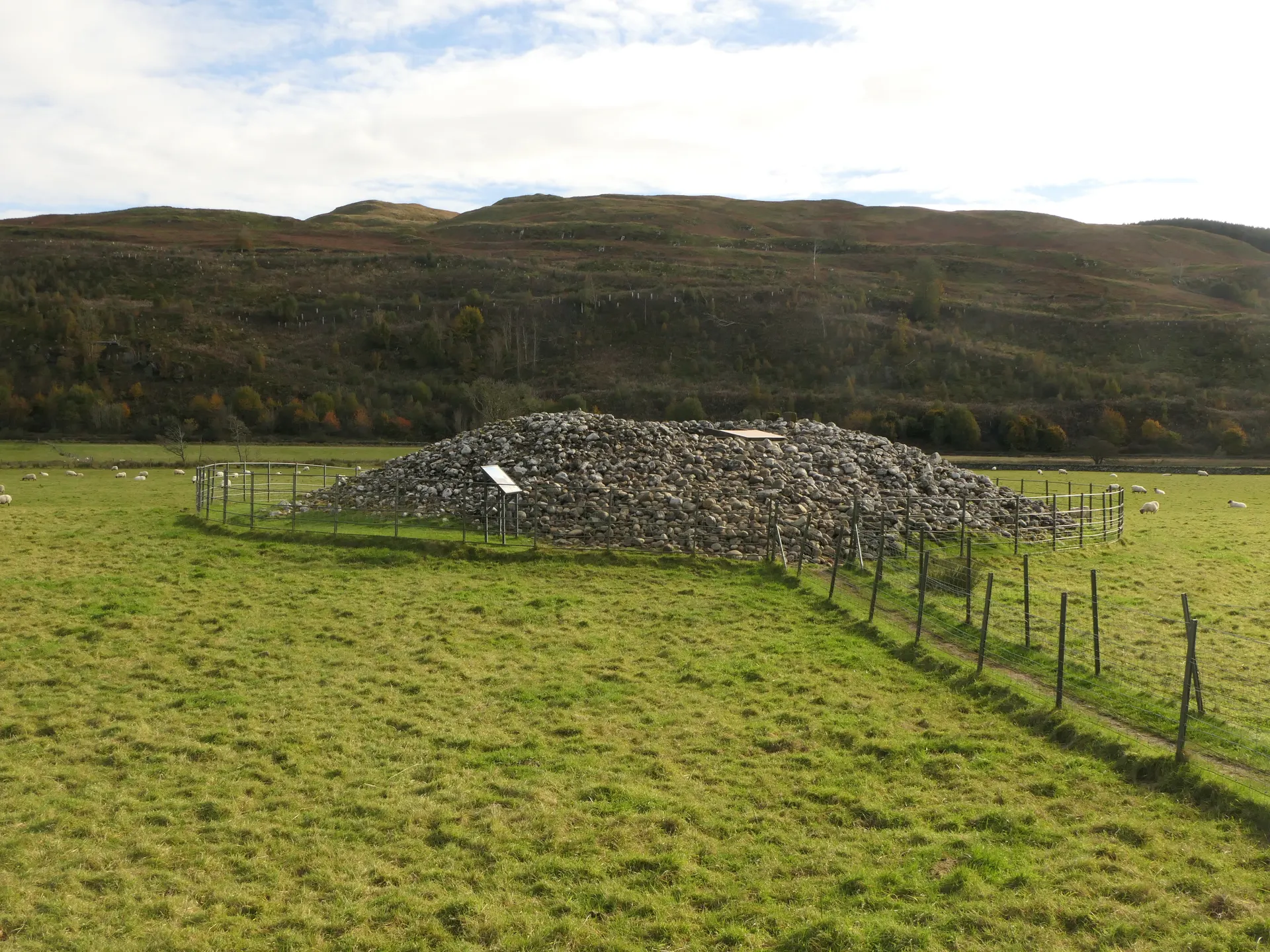
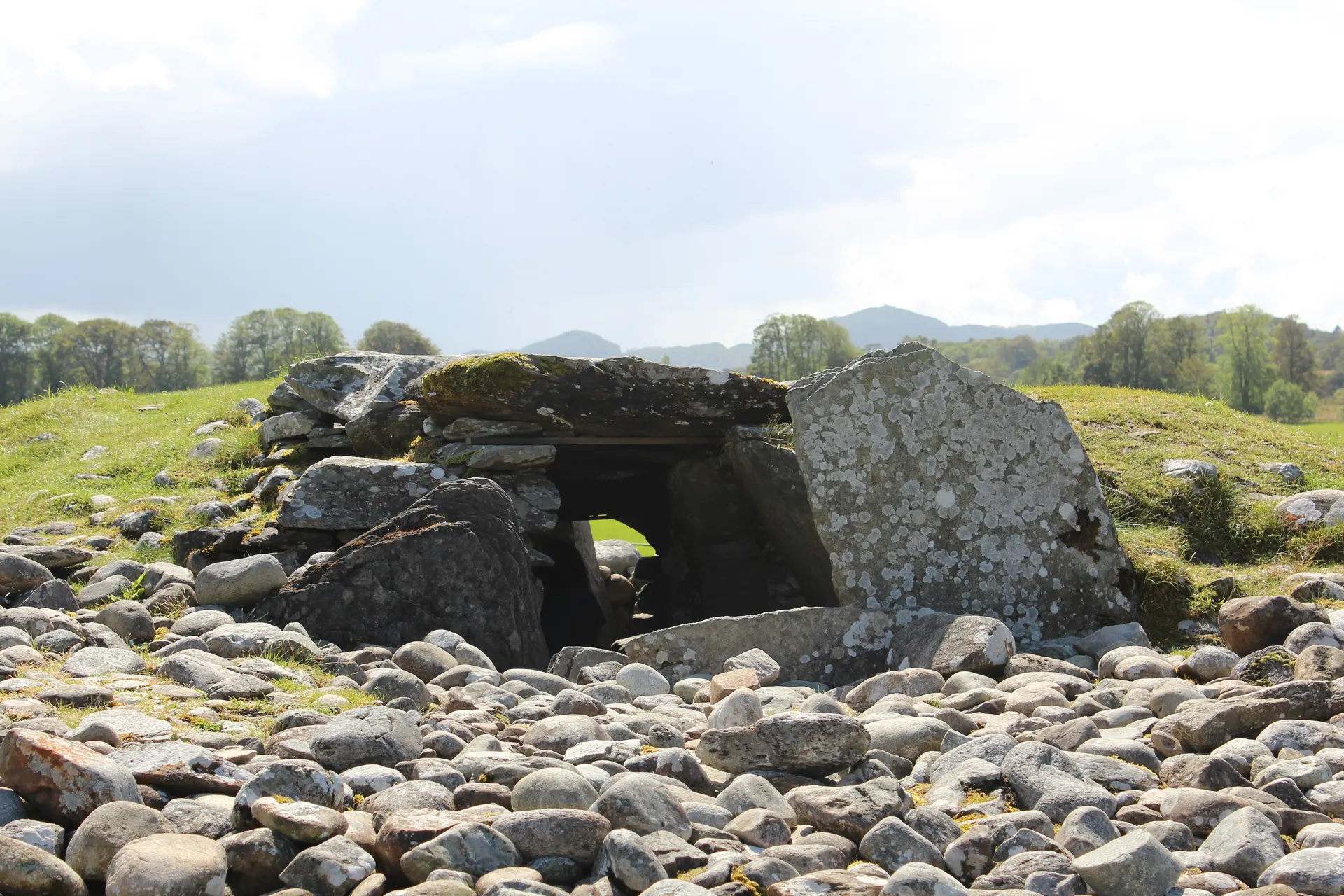
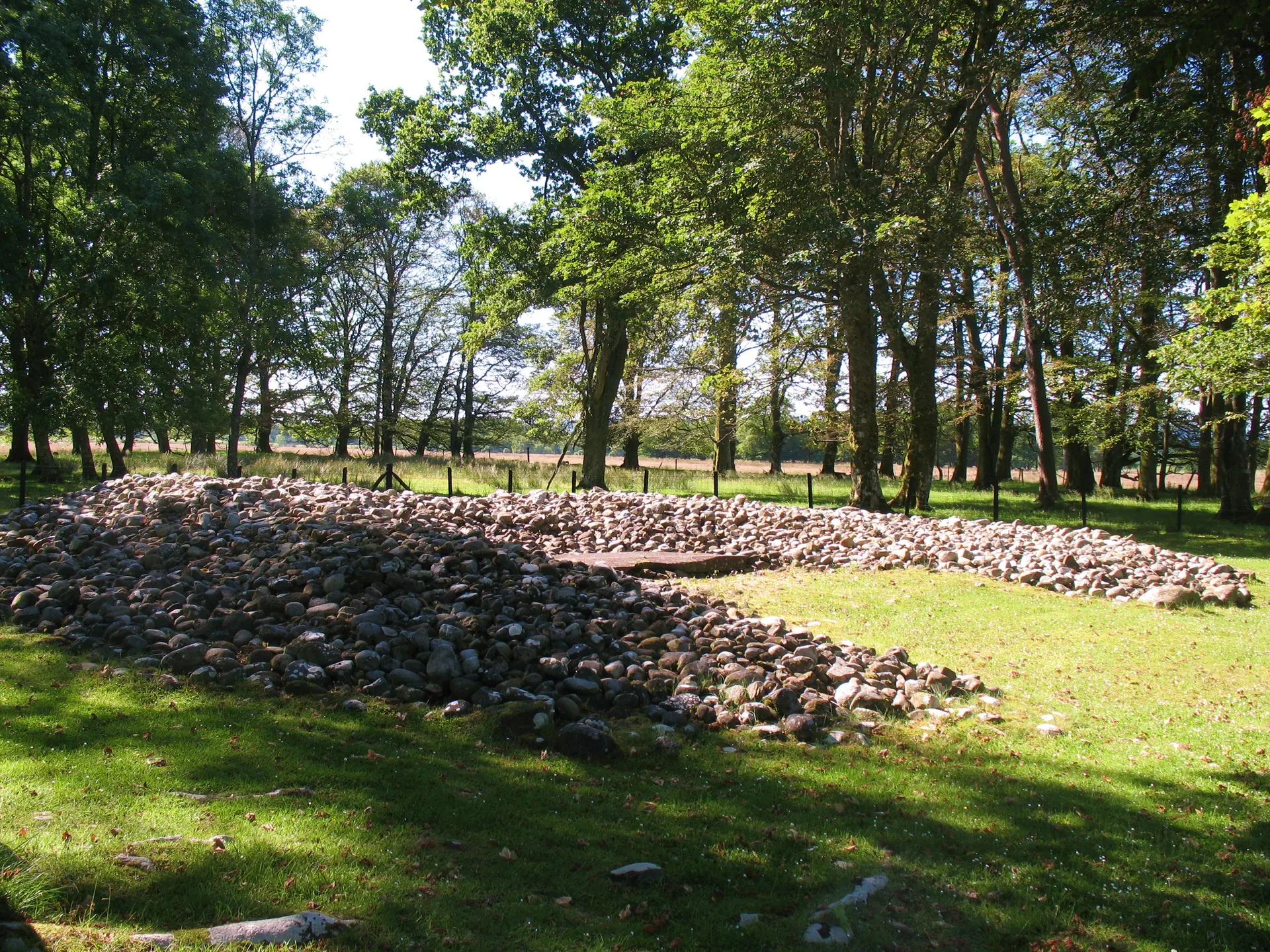
Dunchraigaig Cairn lies under tall trees on a shaded terrace beside the A816 at the south end of Kilmartin Glen, a large round Bronze Age burial cairn about 4,000 years old and about 30 metres across. Excavations in the 1800s found three stone cists. One held only cremated bone, another a body laid full length on its cover slab with cremated bones inside and a crouched burial below. The third, capped by a massive slab nearly four metres long that can still be seen at the edge of the mound, held the remains of up to ten people, rare for a single Bronze Age cist. In 2021 a visitor, Hamish Fenton, noticed carvings under the capstone that proved to be Scotland's earliest known animal carvings: two male red deer with full antlers, thought to be 4,000 to 5,000 years old. Baluachraig rock art and the Ballymeanoch standing stones are each a short walk away. A small car park lies directly across the A816.
Check today’s timesSee all times
- Dunchraigaig CairnOpen all year; an unstaffed open site, no hours published
Opening times may change at short notice.
Historic Scotland: 'Dunchraigaig Cairn is free to visit and is open year-round.' No hours, closures or notices on 20 October 2026; not on Historic Scotland's closures page. Historic Scotland's directory lists it as 'Kilmartin Glen: Dunchraigaig Cairn'.
The site sits on working farmland, so follow the Scottish Outdoor Access Code; strong footwear is recommended. The cairn is just off the road on a tree-covered terrace, and paths lead on to Baluachraig Rock Art and the Ballymeanoch standing stones, each 5 to 10 minutes away. No toilets or other facilities.
Photo: The grassy mound of Dunchraigaig Cairn with the large capstone of a cist at its foot and a spread of cairn stones under tall trees. Bob Embleton, CC BY-SA 2.0. Source: https://commons.wikimedia.org/wiki/File:Burial_mound,_Dunchraigaig_-_geograph.org.uk_-_2571314.jpg. Licence: https://creativecommons.org/licenses/by-sa/2.0. Resized and cropped for display; derivatives retain the source licence.
Reviews & Tips
No reviews yet
No reviews yet. Be the first to share your experience!